

- Recurring puddles, rust, and damp fittings can indicate a leaking water heater.
- Turn off the power or gas and close the cold-water inlet valve to stop the leak.
- Cold water is usually safe to use after isolating the leaking water heater.
- Wet walls and floors can develop mold within 24–48 hours if not properly dried.
- Corroded tanks require replacement, while leaking valves and fittings may be repairable.
“It’s just a little water.” That’s most people’s first thought when they spot a puddle next to the water heater, and honestly, it’s a fair one. Maybe the tank sweated after a long shower, or someone set a wet mop bucket down nearby. But if the spot keeps coming back after you dry it, something is letting water out, and a tank that stays full and pressurized all day doesn’t take breaks.
Left alone for a few weeks, that quiet drip can creep into the drywall and floors until you need full water damage repair in Escondido. Below, we’ll explain how to tell if your water heater is leaking, whether it’s safe to keep using your water, and how long a leak can go before your home needs professional drying. Before you reach for the mop again, keep reading.
How do you know if your water heater is leaking?
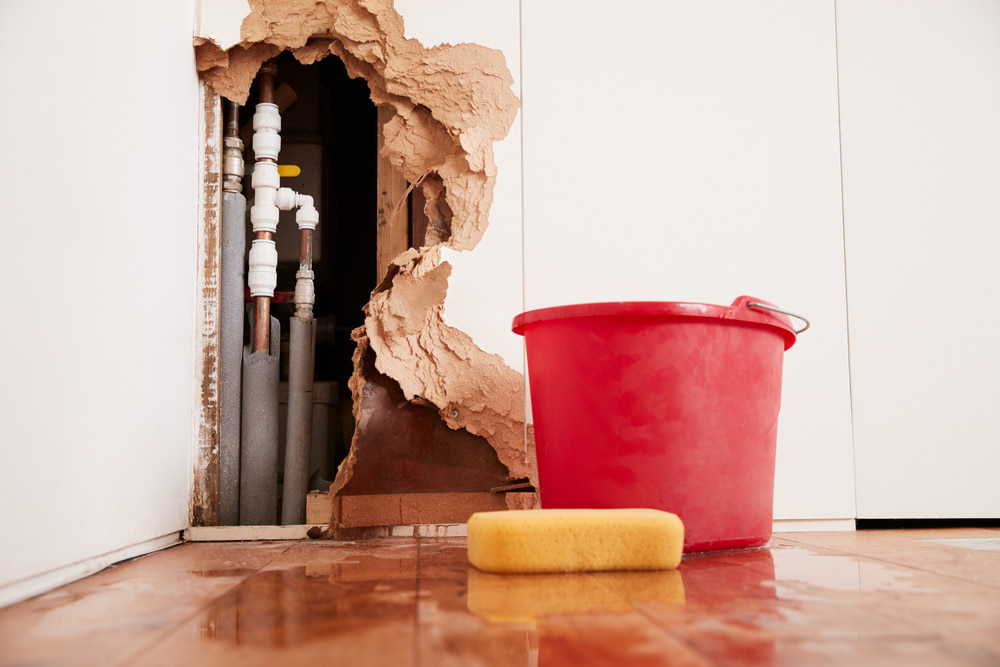
The clearest sign is water where it shouldn’t be, such as a puddle at the base of the tank or moisture sitting in the drain pan. The tricky part is confirming the tank is really the source. Water from a loose connection at the top can run down the side and collect at the bottom, making a minor fitting problem look like a failed tank.
Visible signs around the tank
Grab a flashlight and check for these giveaways:
- Standing water or damp concrete at the base. A ring of moisture that comes back after you wipe it up points to an active leak rather than a one-time spill.
- Water in the drain pan. Heaters installed indoors are typically set in a shallow pan with a drain to catch exactly this kind of leak. A wet pan or a dripping drain line means water is escaping from somewhere above it.
- Rust or mineral crust at the fittings. Orange streaks or chalky white buildup around the pipes often mark spots that have been seeping for weeks.
- Drips from the relief valve’s discharge pipe. This pipe usually runs down the side of the tank or out through an exterior wall, ending a short distance above the ground. Moisture at its end means the valve has been opening.
Less obvious clues
Not every leak announces itself with a puddle. Rusty or cloudy hot water can point to corrosion inside the tank, and on gas models, a pilot that keeps going out may mean water is dripping onto the burner. Rumbling or popping during heating usually means sediment, which isn’t a leak yet but does wear on the tank floor of an older unit.
Sometimes the first evidence shows up on the far side of a wall, as bubbling paint or a baseboard that’s starting to swell. Most homeowners underestimate how far a barely visible drip travels once drywall starts wicking it upward and sideways, which is why a heater tucked behind a door deserves a quick look every few months.
Pinpointing the source
Once you’ve found water, it helps to know roughly where it’s coming from before a technician arrives.
Ruling out condensation and other culprits
Gas heaters can sweat when a lot of cold water enters the tank at once. The drips may sizzle on the burner, then stop once the tank warms up. Dry the floor and the outside of the tank, lay paper towels underneath, and check again in an hour or two. Also check any softener or AC condensate line nearby.
When the towels come back wet
If the towels come back wet, it’s time to call a professional. Jot down which towels got wet to help the technician. Water that shows up only at the base, with dry fittings above it, usually means the steel tank has corroded through, and that can’t be patched. Even a leaking fitting is worth leaving to a plumber, who can reseal it without stressing the aging pipes around it.
Can you still use water if the water heater is leaking?
Yes, in most homes you can keep using cold water normally once you shut off the heater and close the valve that feeds it. Cold water reaches your faucets and toilets through lines that branch off before the heater, so isolating the tank doesn’t cut off the rest of the house. Until a plumber or a new unit arrives, toilets and cold taps work as usual, and a pot on the stove covers the dishes.
What you shouldn’t do is keep drawing hot water. Every time a hot tap opens, the tank refills from the supply line, which keeps the leak going and the floor wet.
Shutting the heater down safely
None of these steps fixes the heater. They just buy time until a professional arrives. Work in this order, since water and electricity don’t mix:
- Cut the power or gas. For an electric heater, switch off its breaker at the panel, but don’t wade through a puddle to get there. Touching electrical equipment near standing water can give you a serious shock, so call an electrician if you can’t reach the switch from a dry spot. For a gas heater, turn the control knob to “Off” or close the gas shutoff valve. If you smell gas, leave the house and call your gas utility or 911 from outside.
- Close the cold-water inlet valve. It’s usually on the pipe entering the top of the tank. A round handle closes clockwise, while a lever handle is closed when it sits crosswise to the pipe. If it’s stuck, don’t force it. Close the home’s main shutoff instead.
- Take the pressure off. Open a hot faucet somewhere in the house. With the inlet closed, this drops the tank’s pressure so water isn’t forced out through the leak.
- Leave the draining to a pro. Emptying the tank means handling water that can scald, and an old drain valve can break or refuse to reseal once it’s opened. A plumber can drain it safely.
- Protect what’s nearby. Soak up standing water, move stored items away, and take photos before cleanup in case you file an insurance claim. If boxes or keepsakes sat in the puddle, set them aside to dry while you sort out which soaked items are worth saving.
What happens if you keep running it
A slow drip can seem harmless, but a few things can go wrong in the meantime:
- The leak can get worse without warning. Corrosion that has eaten through the tank doesn’t stabilize, and a pinhole can widen until the tank splits and releases everything it holds, with the supply line refilling it until someone closes the valve.
- Electric elements can burn out. If the water level drops below an upper element while the power is on, that element can overheat and fail.
- Gas parts can corrode. Water dripping onto the burner or control assembly rusts components and can snuff out the pilot.
- A dripping relief valve may be a warning. That valve opens when temperature or pressure climbs too high. Constant discharge can mean a worn valve, a thermostat set too high, or plumbing with nowhere to absorb thermal expansion, and figuring out which takes a plumber. Never cap or plug the discharge pipe, since that disables the tank’s main safety device.
How long can a leaking water heater last before you need water damage repair?
There’s no reliable countdown for the heater itself. A loose fitting might drip at the same rate for weeks, while a corroded tank can go from a damp spot to a split seam in days. The materials around it are on a much shorter clock. Drywall and carpet pad start absorbing moisture almost immediately, and the longer they stay wet, the more likely they’ll need professional drying or replacement. In practical terms, measure it in hours. Shut the heater down the day you find the leak, and have a professional check anything that got wet, even if it looks dry.
Where the leak starts changes the outlook
The source tells you a lot about how much time you have:
- Top connections: These usually leak slowly, and a plumber can often reseal or replace the fitting. The water still runs down onto the floor in the meantime, so a “minor” drip can soak a closet within weeks.
- Drain valve: Plastic drain valves wear out or crack, and sediment can keep one from sealing. A plumber can usually swap the valve in one visit, and routine professional maintenance and flushing can help the whole heater last longer.
- Relief valve: Occasional drips may only mean a worn valve, but steady discharge calls for a plumber to check the temperature setting and household pressure.
- The tank body: A leak from the tank itself, often at the bottom seam, means the steel has corroded through. There’s no lasting fix, so plan on a licensed plumber replacing the unit soon.
The 24-to-48-hour window for wet materials
Wet building materials that aren’t dried within 24 to 48 hours give mold a real chance to start growing. A leak caught the same day usually means a smaller, faster job for a drying crew. One that’s been seeping behind a closet door for weeks may have kept the drywall and framing wet the whole time, deep enough that household fans won’t reach it.
Where the heater sits matters, too. A garage slab is the most forgiving spot, since concrete doesn’t swell or rot, though boxes stacked against the tank wick moisture fast. Water from a closet or attic can travel into the next room or come through the ceiling below.
Signs the moisture has moved past the heater
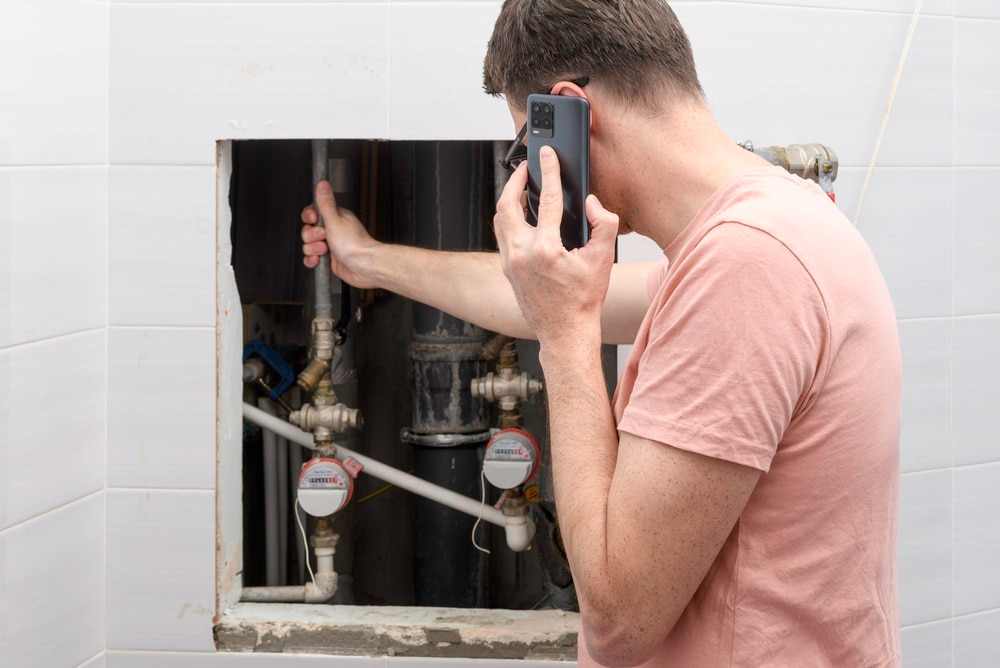
Even if the floor looks dry, any of these means the moisture has gone further than you can see:
- Baseboards or cabinet sides near the heater are swelling or pulling apart.
- Drywall feels soft or shows stains creeping more than a few inches up from the floor.
- Flooring in the next room has started to cup or feel spongy.
- A musty odor lingers after the visible water is gone.
- You can’t say how long the leak was going on before you found it.
Restoration crews use moisture meters and infrared cameras to find wet areas behind walls and under floors, then confirm the framing is actually dry before anything gets closed up. If growth has already appeared on drywall or framing, a few simple steps for clearing the space before mold remediation begins can save time once the crew arrives.
Fixing a part or replacing the whole unit
When a valve or connection fails on a heater that’s otherwise in good shape, having a plumber replace the part usually makes sense. A corroded tank leaves only one option, and age tips borderline cases. An older unit that’s leaking and producing rusty water is near the end no matter which part failed first.
If you replace it, make sure the new unit goes to code. In California, that includes having the tank properly strapped against earthquake movement, because a heater that shifts in a quake can snap its connections and create a far bigger leak. Between the gas or electrical hookups and the permit, replacement is a job for a licensed plumber.
Who can I call for prompt water damage repair near me in Escondido, CA?
That would be us. If a water heater leak has crept into your walls or floors, give the Risk Free Serv team a shout. A real person from our local crew answers day or night, and we’ll come out for a free inspection and estimate, including a moisture inspection that shows how far the water actually went.
Our IICRC-certified techs dry everything out, and since we’re also a licensed general building contractor, we can rebuild whatever had to come out. We work with homeowners from the neighborhoods near the California Center for the Arts out into North County, and we’ll help with the insurance paperwork, too. Reach out today, and we’ll take it from there.