

Has your home or workplace in San Diego suffered water damage? Stay calm and call your trusted water restoration company from the area as soon as possible. These trained water damage repair specialists are equipped to act quickly to mitigate the damage and prevent further complications like mold growth.
Keep in mind that no matter how small a leak might be, it requires immediate attention if you want to avoid the situation getting out of hand. So, instead of postponing the inevitable, put your professional on speed dial and have them fix the damage promptly.
In the following article, you’ll learn the answers to the questions of how fast mold grows after a water leak, how mold can affect air quality and create a health hazard, how excess water, leaks, and humid environments can cause mold growth or spur existing mold to start growing, and how to get rid of mold from a water leak. Read on!
How long does it take for black mold to grow from water damage?
When dealing with a water-damaged property in San Diego, mold growth is undoubtedly one of your biggest concerns because once mold spores take root in your home, they will start spreading fast and can be quite difficult to eliminate. Unfortunately, in the right conditions, mold growth can start within only 24 to 48 hours, so you need to think on your feet and reach out to your water damage repair professional immediately.
While you might be tempted to get ahead of the situation and tackle this problem on your own, you should remember that mold removal and remediation require a great level of expertise to be completed safely and effectively. Therefore, instead of putting yourself and your family at risk, you should contact the mold remediation experts and leave the job to them.
How long does it take for mold to grow on wet drywall?
Under ideal conditions, mold can begin to grow on wet drywall within 24 to 48 hours. The exact timeframe can vary depending on factors such as temperature, humidity levels, and the presence of organic materials for the mold to feed on.

Moisture from a water leak or high humidity can provide the necessary conditions for mold spores to germinate and colonize the surface of wet drywall.
It is crucial to address water damage promptly, thoroughly dry the affected area, and take necessary steps to prevent mold growth to minimize potential health risks and structural damage.
Can a one-time water leak cause mold?
Short answer: yes. People often believe that only extensive water damage leads to mold growth and a recurring mold problem. However, this is not true. In reality, mold thrives in damp, humid conditions, so even if your property has suffered a minor leak, if not fixed timely, it can lead to mold infestation.
Fortunately, your trusted mold removal experts are familiar with all those hidden places where mold frequently appears, so they will ensure to inspect the property first, conduct any necessary tests, and eliminate this pest once and for all.
Can mold grow after leak is fixed?
Yes, mold growth can occur even after a leak has been fixed. While addressing the source of moisture is a critical step in preventing mold growth, it doesn’t guarantee that mold spores won’t take root. Mold spores are ubiquitous in the environment and can remain dormant until they come into contact with moisture again.
If mold spores are present in the affected area or have spread to other parts of the building, they can easily continue to grow and thrive if the conditions are favorable. This includes high humidity levels, insufficient ventilation, excess moisture, and the presence of organic materials for mold to feed on, such as drywall, wood, or carpet.
To avoid mold growth after a leak has been fixed, it is essential to remove excess moisture, thoroughly dry the affected area, and address any residual moisture. This may involve using dehumidifiers, fans, or professional drying equipment to ensure that the area is completely dry.
Keep in mind that mold grows on organic surfaces such as wood as well. If you see mold growing on wood furniture (especially if it’s one of the more dangerous mold types such as black mold), consider replacing these items if mold remediation isn’t possible.

Does mold on furniture spread?
It certainly can. If not addressed, mold can grow rapidly and spread quickly to other surfaces. Sometimes, this can happen in just a few hours. This is why it’s vital to stop mold as soon as you detect it in your home.
If you’re not sure how mold got there, always check for active leaks and whether there’s any damp surface near the affected furniture.
Is mold dangerous?
If left unchecked, a mold problem can spread rapidly and negatively impact the air quality in your property, turning into an active health hazard. Mold can produce mycotoxins, which can cause various respiratory problems for the occupants, including allergic reactions, asthma, difficulty breathing, and worse. Prolonged exposure can result in even more severe health problems.
What’s more, affected surfaces and even building materials underneath can suffer significant mold damage, while also releasing spores that will infect other areas of your property. This will result in costly repairs down the road and an inability to sell the place on the real estate market.
For this reason, it’s strongly advised to monitor the area for any signs of visible mold growth and promptly address any moisture problem that may arise. Regular inspections and maintenance performed by trained mold removal specialists can help detect and mitigate mold growth in its early stages, preventing respiratory issues, musty odor, eye irritation, and other problems.
How do you repair a water damaged ceiling?
Repairing your water damaged ceiling is not easy, especially if you’re dealing with more extensive damage. Here is what you should do:
Stabilize the area around the leak
To get the situation under control while waiting for your water repair professional to arrive, you should try to contain any water that has built up so far and prevent it from pooling. To do this, it’s best to make a small hole in the ceiling, at the center of the leak, and collect the pouring water in a bucket. If there’s any standing water or excess moisture that can help mold grow in the area, address it immediately.
Repair the source of the leak
Your every attempt to repair your damaged ceiling will be futile unless you deal with the source of the leak first. Having in mind that leaks are sometimes hard to locate, your best course of action is to hire emergency leak detection services. These professionals possess the right diagnostic tools and will manage to uncover the cause of water damage with precision and security.
Dry the damage & repair the ceiling
After the source has been dealt with, the actual water damage restoration work may begin. Considering that drywall is extremely porous and that, when exposed to water, it creates perfect conditions for mold to grow, you will need to open it up and dry it out. It’s best to rely on an experienced crew of water damage restoration experts who will use commercial-grade tools like dehumidifiers, fans, HEPA filters, and similar.
Besides, your water damage restoration technician will estimate the extent of the damage and conclude if certain parts of the ceiling can be repaired or are unsalvageable and need to be replaced. Once they finish the job, all that’s left to do is to repaint the affected areas. To make sure that they will blend in nicely, you can repaint the entire ceiling and give it a fresh look.
How to stop mold from growing on walls?
Condensation is one of the most common factors that lead to mold growth. It occurs when warm air has no way to escape outside and comes in contact with colder surfaces such as mirrors, window panes, doors, or walls. The conditions for condensation are particularly favorable during winter as it’s time for hot showers and boiling kettles and we tend to keep our doors and windows closed.
Here’s how you can reduce the effects of condensation and avoid the need to reach out to a water restoration company near you in San Diego:
- Dry any wet or damp areas immediately
- Ensure proper ventilation
- Keep the humidity levels inside your home in check
- Don’t allow water to accumulate around your home
How to reduce mold spores in the house?
While mold is naturally present in our environment, it particularly thrives in damp areas. A large amount of mold spores in your home can be the result of a number of moisture problems, including:
- Poor indoor air circulation
- Poor outdoor drainage
- Internal plumbing or roof leaks
- Inadequate ventilation
- High indoor humidity
- HVAC system malfunctions
When mold is present, disturbed, or not entirely removed from your home, the spores thrive and can remain airborne for an indefinite amount of time. This is why it’s important to ensure proper ventilation, inspect air quality on a regular basis, and immediately reach out to a water restoration company near you in case you notice any signs of infestation.
Here’s what you can do to reduce the amount of spores to a minimum:
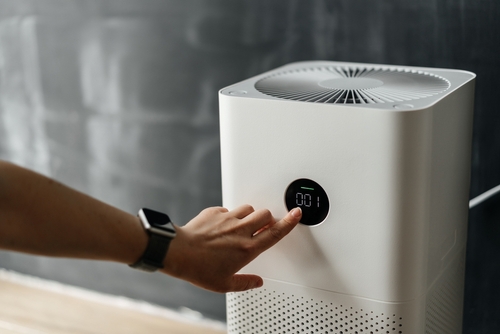
- Installing an air purifier can help capture and remove harmful pollutants, including mold spores.
- Keep your home ventilated by making sure that areas such as the basement, attic, bathroom, and kitchen have proper fan ventilation.
- Opt for HVAC filters with higher efficiency that are designed to capture even the smallest pollutants.
How do you kill mold spores in the air naturally?
Opting for natural methods can help you get rid of spores efficiently and maintain a safe and healthy environment. Here are several ingredients you can use:
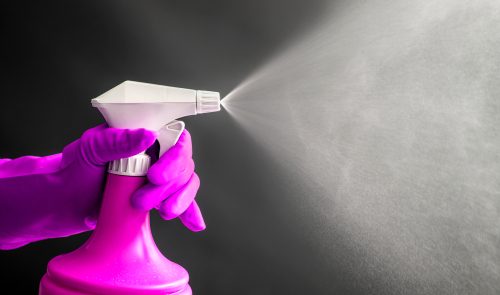
- Vinegar: Distilled white vinegar is highly effective in disinfecting surfaces and can help eliminate mold spores. Use a spray bottle to mix equal parts water and vinegar and spray it in the air.
- Tea tree oil: This oil has antifungal properties. Put a few drops of it in a spray bottle filled with water and spray into the air.
- Hydrogen peroxide: As a natural disinfectant, hydrogen peroxide can be highly efficient in killing mold spores. Make a solution of two parts water and one part hydrogen peroxide and spray in the air.
However, if mold growth is extensive or it has spread to hidden areas, it’s best to rely on a trusted water restoration company in San Diego for professional help.
Where to find the best water restoration company near me in San Diego, CA & beyond?
If your property has suffered water damage and you fear mold infestation on your floors, walls, or even ceilings, call Risk Free Serv. We are at your disposal 24/7 and will go above and beyond to address your mold problem and related issues as soon as possible. Our water damage repair and mold remediation services are available across San Diego and the area, so whether you live in Hillcrest, Kearny Mesa, or any other neighborhood, you may count on us.
We specialize in emergency plumbing, water damage, and mold remediation services, and are equipped to conduct projects of any size and scope. Our restoration specialists are IICRC-certified and they possess years of experience in the field. Risk Free Serv will keep you in the loop every step of the way, and we promise to do our best to complete the job promptly and efficiently.