Renovation

How Bathroom Leaks Spread Mold Beyond the Bathroom

Key Takeaways

  • Bathroom leaks can spread mold into nearby rooms through hidden cavities.
  • Slow leaks may keep walls and insulation damp long after surfaces appear dry.
  • Musty odors, stains, and soft materials can signal hidden mold growth.
  • Water may travel through walls, floors, ceilings, and structural materials.
  • Mold remediation may be needed when moisture and growth extend beyond surfaces.

A bathroom leak may seem contained to one room, but water rarely stays exactly where it first appears. Moisture can move through wall cavities, flooring, ceilings, insulation, and framing before visible damage shows up elsewhere in the home. A leaking shower, toilet, supply line, tub, or sink can therefore create conditions for mold growth well beyond the bathroom itself.

The longer moisture remains hidden, the more difficult it becomes to tell how far the damage has spread. A stained ceiling in the room below, a musty odor in a hallway, or peeling paint on the opposite side of a bathroom wall may all point back to the same leak. Finding and stopping the source is the first step, but proper drying and mold remediation in Encinitas may also be necessary when water has reached concealed areas throughout your home.

Can a bathroom leak cause mold in another room?

Yes. A bathroom leak can lead to mold growth in another room when water travels through shared walls, ceilings, floors, or structural cavities. The affected area may be several feet away from the original leak.

Bathrooms contain multiple plumbing connections and fixtures, so even a relatively small leak can create hidden moisture over time. Water from a shower valve, toilet connection, supply line, drain, or tub enclosure may seep into surrounding materials rather than pooling where you can see it.

Shared walls can hide the true extent of the leak

Bathrooms often share walls with bedrooms, closets, hallways, or utility spaces. If water enters the wall cavity, it can soak into drywall, insulation, wood framing, or other porous materials on both sides. That means visible damage may appear outside the bathroom even though the plumbing failure started inside it.

Can a bathroom leak cause mold in another room

For example, you may notice:

  • Bubbling paint in an adjoining room
  • Dark staining near a shared wall
  • Soft drywall near the baseboard
  • A musty smell inside a closet
  • Warped flooring outside the bathroom
  • Ceiling stains on the level below

Slow leaks can be especially difficult to detect

A major plumbing failure usually gets your attention quickly. But slow bathroom leaks can cause more subtle problems because they may continue for days, weeks, or longer before you start noticing.

A small amount of moisture repeatedly entering the same cavity can keep materials damp enough to support mold growth. The surface may dry between uses while deeper materials remain wet. This is one reason recurring dampness around a shower, tub, toilet, or vanity should not be ignored simply because there is no standing water.

How does water from a bathroom leak spread behind walls?

Water from a bathroom leak can move behind walls by soaking into porous materials, following framing, or traveling through openings around pipes and fixtures. Gravity can also carry moisture downward into floors and ceilings below. 

Once water enters a concealed cavity, it may spread farther than expected before reaching an exposed surface. Drywall, insulation, wood, and subflooring can all absorb moisture. Water may also follow studs, plumbing penetrations, seams, and gaps between building materials.

Water does not always travel in a straight line

The visible leak location and the damaged area may not line up directly. For example, water from a second-floor bathroom may enter the floor assembly, travel along joists, and eventually appear as a ceiling stain in a different part of the room below. A leak behind a shower wall may move sideways before affecting drywall in an adjacent bedroom.

Several factors influence how far moisture spreads, including:

  • How long the leak has been active
  • How much water is escaping
  • The materials surrounding the leak
  • The slope and layout of the structure
  • Whether insulation is present
  • Indoor temperature and humidity

Porous materials can hold moisture after the leak stops

Stopping the leak prevents additional water from entering the structure, but wet materials may still need time and professional drying service to return to acceptable moisture levels.

Drywall is great at absorbing water through its paper facing and gypsum core. Fiberglass insulation can trap moisture inside wall cavities as well. Wood framing and subflooring may also remain damp even when nearby surfaces feel dry.

If those materials stay wet, conditions can remain favorable for microbial growth. We use moisture meters and other detection tools to identify affected areas that are not obvious by touch or appearance. In some cases, sections of drywall or other finishes may need to be opened to access wet materials and improve airflow.

What are the signs of hidden mold from a bathroom leak?

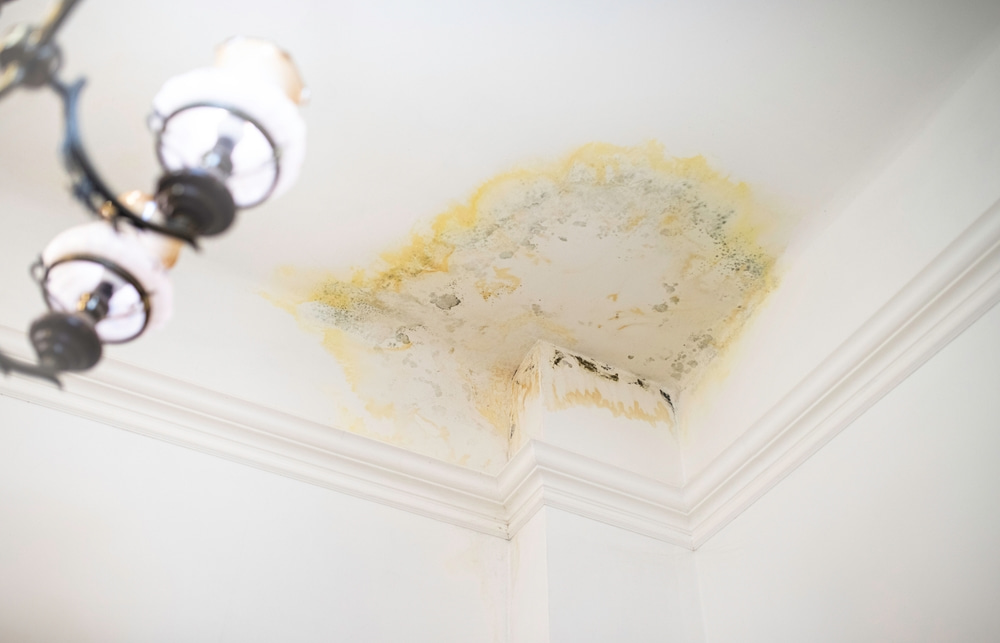
Hidden mold may cause musty odors, discoloration, peeling finishes, soft drywall, or recurring moisture problems. In some cases, there may be no visible mold on the surface even though growth is present inside a wall or ceiling cavity. The most important clue is often a combination of persistent moisture and unexplained changes in nearby materials.
What are the signs of hidden mold from a bathroom leak

A musty odor can appear before visible growth

A persistent earthy or musty smell near a bathroom, adjoining room, closet, or hallway can indicate excess moisture or microbial activity. The odor may become stronger after showers or when indoor humidity rises. If cleaning the visible bathroom surfaces does not eliminate the smell, the source may be hidden behind walls, below flooring, or above the ceiling.

Keep in mind that odor alone does not confirm the exact location of mold, but it can be a reason to investigate further.

Changes in walls, ceilings & flooring can signal hidden moisture

Water-damaged materials often change before mold becomes clearly visible.

Watch for:

  • Peeling or bubbling paint
  • Discolored drywall or ceilings
  • Swollen baseboards
  • Soft or crumbling wall surfaces
  • Warped flooring
  • Loose tiles
  • Repeated staining after cleaning
  • Persistent dampness around fixtures

Mold can develop on the opposite side of a bathroom wall

A leak behind a vanity, shower, or toilet may affect the room on the other side of the wall. Mold may develop on drywall backing, insulation, framing, or other concealed materials before it becomes visible indoors. This is why checking only the bathroom can miss a big part of the problem.

If damage appears in an adjoining space, the moisture source should be traced rather than treating the visible stain or surface growth alone. Cleaning a small patch without stopping the leak and drying the cavity may allow the problem to return.

When should you call for mold remediation after a bathroom leak?

You should call our professional mold remediation team when a bathroom leak has caused visible mold, persistent musty odors, widespread moisture, or contamination inside walls and other concealed areas. You may also need remediation when damaged materials cannot be safely or effectively cleaned in place.

However, the priority is always to stop the leak first. Mold remediation cannot solve an active moisture problem if water continues entering the structure.

Mold remediation may be needed when the damage extends beyond the surface
When should you call for mold remediation after a bathroom leak

Small surface spots caused by ordinary bathroom humidity are different from mold growing because of a plumbing leak inside the structure.

Professional remediation becomes more important when:

  • Mold is visible across multiple materials
  • Growth returns after surface cleaning
  • A strong musty odor persists
  • Water has remained hidden for an extended period
  • Drywall, insulation, or other porous materials are affected
  • Moisture has spread into adjoining rooms
  • The wall or ceiling cavity needs to be opened

Who are the leading specialists in mold remediation in Encinitas, CA & beyond?

If a bathroom leak has left you concerned about hidden mold, Risk Free Serv can help identify the affected areas and determine the right next steps. We specialize in moisture inspections in Encinitas and throughout the county, including homes around the San Diego Botanic Garden. We have a vetted, certified team of experienced professionals equipped with modern technologies to help property owners get their lives back on track with as little inconvenience as possible.

We can also help you understand what to do after a burst pipe, how to handle a wastewater backup at home, and when flood damage needs structural repair as part of a broader restoration response. Don’t lose a minute more before reaching out to us to assess the damage, inspect for lingering moisture, and help restore your home safely and thoroughly. Call us ASAP!
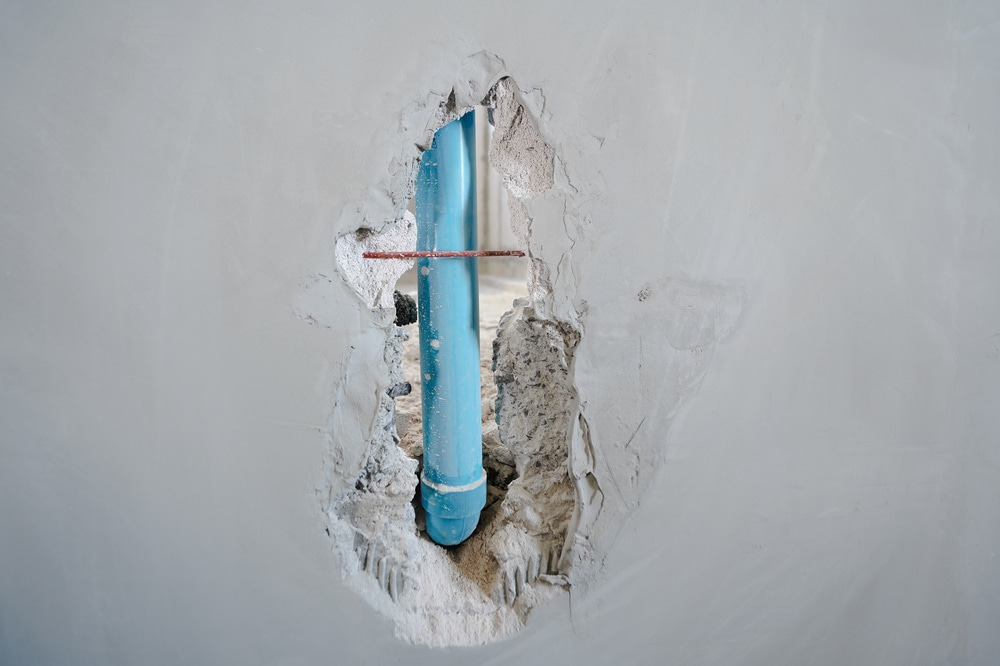
After a Burst Pipe in the Wall: Why Emergency Plumbing May Not Be Enough

Key Takeaways

  • Stop the water supply quickly when a pipe bursts inside a wall.
  • Hidden moisture can spread beyond the visible leak and damage nearby materials.
  • Burst pipes can create mold risks when damp areas are not dried properly.
  • Plumbing repair stops the leak, but restoration handles the water damage.
  • Professional drying helps prevent further damage and supports safe repairs.

A burst pipe inside a wall can cause far more damage than the visible leak suggests. Water may spread through drywall, insulation, flooring, framing, and adjoining rooms before you realize how much of the property has been affected. Our emergency plumbers can stop the source, repair the damaged pipe, and help prevent additional water from entering the space. However, fixing the plumbing problem does not automatically remove the water that has already soaked into the building.

Moisture trapped behind walls can continue damaging materials long after the leak stops. It may weaken drywall, affect wood components, create odors, and increase the risk of microbial growth. That is why a burst pipe often requires two separate responses: plumbing repair to stop the water damage in Encinitas and professional restoration to dry, clean, and repair the affected areas.

What should you do when a pipe bursts inside a wall?

When a pipe bursts inside a wall, stop the water supply as quickly as possible and call our emergency plumbing repair team. Once we have the leak under control, we will inspect the affected areas for hidden moisture and water damage.

A burst pipe can release a surprising amount of water in a short period. Because the pipe is concealed, much of that water may travel through the wall cavity before appearing on the floor or ceiling. By the time staining, bubbling paint, or dripping water becomes visible, nearby materials may already be saturated.

If it is safe to do so, shut off the property’s main water valve before our plumbers arrive. Turn off electricity to heavily affected areas, especially if the water is near outlets, wiring, appliances, or electrical panels. Avoid entering an area where water and electrical hazards may be present.

Watch for signs that water has spread beyond the leak

The visible damage does not always show the full extent of the problem. Water can move through structural cavities and absorb into porous building materials.

Can a burst pipe cause mold behind walls

Common signs of hidden water damage include:

  • Soft or swollen drywall
  • Peeling paint or wallpaper
  • Water stains on walls or ceilings
  • Damp carpet or flooring
  • Warped baseboards or trim
  • Musty or unusual odors
  • Sagging ceiling materials
  • Moisture appearing in an adjoining room

Have the affected areas checked for hidden moisture

After we repair the pipe, moisture detection is the next important step. Our water damage restoration professionals use moisture meters and other equipment to determine where water has traveled and which materials remain wet.

This assessment helps establish the actual drying area. Simply wiping up visible water or placing a household fan near the damaged wall may not address moisture trapped inside insulation, wood framing, or subflooring.

Depending on the amount of water and the materials involved, restoration work may include water extraction, controlled removal of damaged materials, air movement, dehumidification, and ongoing moisture monitoring.

Can a burst pipe cause mold behind walls?

Unfortunately, yes. A burst pipe can create conditions that support mold growth when moisture remains trapped behind drywall, insulation, or other building materials. Most homeowners may not immediately see what is happening inside the wall, and the first signs usually appear days later. Luckily, professional drying services can significantly reduce the risk of mold growth.

Wall cavities can be especially vulnerable because moisture may remain hidden after the visible water disappears. Damp drywall, paper backing, wood, dust, and other organic materials can provide suitable conditions for microbial growth when they stay wet.

Why hidden moisture creates a problem

A closed wall cavity receives less airflow than an open room. If water soaks into insulation or reaches framing, those materials may dry much more slowly without proper intervention.

Several factors influence how quickly conditions can deteriorate, including:

  • How long the leak continued
  • How much water entered the wall
  • The materials that became wet
  • Indoor temperature and humidity
  • Whether insulation is present
  • How quickly professional drying begins

Drying should be controlled & monitored

Professional structural drying involves more than placing fans around the room. Our restoration team chooses the drying equipment based on the size of the affected area, moisture levels, and the type of materials involved.

Air movers help increase evaporation from wet surfaces, while dehumidifiers remove excess moisture from the air. Moisture readings can then be taken throughout the drying process to confirm whether materials are responding properly.

Do you need water damage restoration after a plumber fixes the leak?

Do you need water damage restoration after a plumber fixes the leak

It all depends on the situation and varies from one case to the next. You may need water damage restoration if the burst pipe allowed water to soak into walls, floors, insulation, ceilings, or other building materials. Water damage restoration may also be necessary after wastewater emergencies to remove contamination, control moisture, and help return the affected space to safe conditions. While our plumbers address the source of the leak, our restoration team takes care of the damage caused by water that escaped. These services solve different parts of the same emergency.

Our plumbers may need to cut into the wall, replace the failed section of pipe, and restore the plumbing system. Once that work is complete, however, wet drywall, soaked insulation, damaged flooring, or moisture inside framing can remain. Leaving those materials untreated can lead to further deterioration and make later repairs more extensive.

Plumbing repair stops the problem at its source

Emergency plumbing is the priority because drying cannot succeed while water is still entering the property.

Our plumbers’ role usually includes:

  • Locating the failed pipe
  • Shutting down the affected water line
  • Repairing or replacing damaged plumbing
  • Testing the repair for leaks
  • Restoring water service when appropriate

Restoration addresses the water that escaped

We start our water damage restoration service with a thorough inspection of the affected area. Our restoration team determines where the water traveled, how deeply materials were affected, and what can be dried in place.

Depending on the situation, the process may involve:

  • Extracting standing or trapped water
  • Removing unsalvageable drywall or insulation
  • Drying framing, flooring, and other structural materials
  • Using dehumidification to control indoor moisture
  • Cleaning affected surfaces when necessary
  • Monitoring moisture levels until drying goals are reached
  • Preparing the space for repairs or reconstruction

Repairing the pipe & restoring the room are two different stages

A repaired pipe means the active leak has ended. It does not necessarily mean the water damage is resolved.

If you react quickly and the minor leak is caught almost immediately, the drying process may be limited. However, a larger burst behind a wall usually requires a much more involved response, particularly when water reaches several rooms or multiple building materials.

Handling both stages correctly helps prevent hidden moisture from being sealed behind new drywall, flooring, or finishes. It also gives contractors a dry, stable area to work with when repairs begin.

Who can help me deal with residential water damage in Encinitas, CA & the nearby areas?

residential water damage in Encinitas, CA

If a burst pipe has left water inside your walls, floors, or other parts of your home, Risk Free Serv is your go-to team to assess the damage quickly and prevent a smaller problem from becoming more complicated and extensive down the line. Our water damage restoration team serves homeowners throughout Encinitas, including neighborhoods near the San Elijo Lagoon Ecological Reserve

We can inspect the affected areas, identify hidden moisture, begin professional drying, and help determine what materials may need further repair. Reach out to us without delay, and we’ll get the restoration process moving quickly. Every moment counts, so let’s not waste any more time. Contact us now!

San Diego’s Top 5 Damage Restoration Companies in 2026

Be it water, fire, or structural damage, when disaster strikes your home or business, the pressure is immediate and every minute matters. You need a team that responds fast, handles the details right, and reduces stress during an already turbulent time. Choosing the right restoration company can make the difference between a smooth recovery and weeks of stress.

Some property owners lean toward companies with rock-solid response times and verifiable credentials. Others want reliable, well-documented restoration that helps with insurance claims and ensures minimal future risk. The most reputable firms combine rapid response times with trained technicians, transparent communication, and proven results backed by strong community feedback. Whether it’s residential flooding or large-scale commercial restoration, these companies have built a reputation for professionalism and reliability throughout San Diego County:

  • Risk Free Serv
  • Exodus Property Restoration
  • Superior Restoration
  • EZ Flood Restoration
  • Jakobsen Restoration

Each restoration company has its own strengths. These five stand out not because they’re identical, but because each brings a proven system for getting San Diego homes and businesses back to normal.

How San Diego’s top restoration teams stack up in 2026

Company

Pros

Cons

Years in Business

Specialties

Risk Free Serv

  • IICRC-certified and fully insured restoration specialists
  • Serves both residential and commercial properties
  • Comprehensive water, fire, and mold restoration services
  • Free inspections, estimates, and damage assessments
  • Direct insurance billing and claims assistance
  • Eco-friendly mold removal by certified pros
  • Advanced drying, dehumidifying, and leak detection equipment
  • Licensed general contractor for full residential construction and repairs
  • 24/7 emergency plumbing response with rapid on-site arrival
  • High customer satisfaction and top-rated reviews in San Diego
  • High demand can mean limited same-day availability during peak storm seasons

  • Nearly a decade in the industry

Company

Pros

Cons

Years in Business

Specialties

Exodus Property Restoration

  • Restoration and remodeling services
  • Emergency and 24/7 response
  • Residential and commercial capacity
  • Over a decade of experience
  • Broad focus and mixed expertise
  • Smaller public footprint
  • Potential prioritization conflicts
  • 13+ years in the industry
  • Water damage restoration & flood/water removal
  • Sewage cleanup, flood cleanup, emergency water mitigation
  • Home remodeling and renovation (kitchens, bathrooms, flooring, whole-home remodels, windows/doors/trim)
  • Combined restoration and renovation projects

Company

Pros

Cons

Years in Business

Specialties

Superior Restoration

  • IICRC-certified technicians
  • 24/7 emergency response across Southern California
  • Handles both mitigation and reconstruction
  • Works with most major insurance companies
  • Extensive service area and local offices
  • Based in Temecula, not San Diego
  • Franchise-style model
  • Generalized approach
  • Established in 2010
  • Water and flood damage restoration
  • Fire and smoke damage cleanup
  • Mold remediation
  • Structural drying
  • Property reconstruction and rebuild services

Company

Pros

Cons

Years in Business

Specialties

EZ Flood Restoration

  • 24/7 emergency response
  • Extensive range of restoration and construction services

  • Serves both residential and commercial properties

  • Licensed and insured technicians

  • Offers remodeling and structural repair options
  • Covers multiple regions beyond San Diego
  • Focus split between restoration and remodeling
  • Certification details not clearly stated
  • Limited third-party reputation data


  • N/A
  • Water and flood damage restoration
  • Fire and smoke damage cleanup
  • Mold remediation and inspection
  • Plumbing, drywall, and framing repairs
  • Kitchen, bath, and full-home remodeling

Company

Pros

Cons

Years in Business

Specialties

Jakobsen Restoration

  • Full-service restoration and repair

  • 24/7 emergency response and free assessments

  • Insurance claim assistance

  • Residential and commercial coverage
  • Wide service mix may limit specialization
  • Limited long-term reputation data
  • Scheduling constraints during high demand
  • N/A
  • Water/flood damage restoration and structural drying
  • Fire and smoke damage remediation and cleanup
  • Mold inspection and remediation services
  • Reconstruction and remodeling/repair

Risk Free Serv

Among San Diego’s top restoration providers, Risk Free Servstands out for its comprehensive, end-to-end service model. Unlike many companies that stop at mitigation, Risk Free Serv is also a licensed general contractor, which means they can oversee every stage of recovery, from initial cleanup and structural drying to full reconstruction. Their IICRC-certified team handles both residential and commercial properties, using advanced equipment and eco-friendly materials for long-lasting results. Beyond technical precision, they offer direct insurance billing, free inspections and estimates, and responsive 24/7 support, creating a smoother experience for clients during stressful times. With this combination of transparency, training, and true rebuild capability, Risk Free Serv brings a level of reliability few local competitors match.

Pros

Here’s how Risk Free Serv stands out:

  • Licensed general contractor: Unlike most restoration companies that stop at mitigation, Risk Free Serv is fully licensed to handle complete reconstruction and repairs. This means clients work with one team from start to finish, eliminating the delays and communication issues that often arise when multiple contractors are involved. It’s an end-to-end approach that ensures continuity, accountability, and consistent workmanship throughout the entire process.
  • IICRC-certified professionals: Every technician at Risk Free Serv meets the standards of the Institute of Inspection, Cleaning and Restoration Certification (IICRC), which sets the benchmark for industry quality. This ensures that water, fire, and mold restoration work is completed to the highest safety and performance standards. Homeowners and businesses gain peace of mind knowing that every step is handled by trained, certified experts.
  • Comprehensive service range: Risk Free Serv offers a complete lineup of restoration and construction solutions under one roof. Their team handles water extraction, structural drying, and fire damage repair with precision, while also providing plumbing fixes and full rebuilds when needed. By combining restoration and construction services, they minimize downtime and help clients return to normal faster.
  • Insurance-friendly process: Navigating insurance claims after a disaster can be overwhelming, which is why Risk Free Serv provides direct billing and documentation support. Their staff coordinates with adjusters and insurance providers to ensure claims are processed smoothly, reducing stress for property owners. This streamlined process saves clients time and prevents the common errors that lead to delayed reimbursements.
  • Eco-conscious and health-focused methods: The team integrates environmentally responsible materials into their remediation work, especially in mold and disinfection services. Their approach prioritizes both long-term safety and indoor air quality, using solutions that eliminate pathogens without leaving behind harsh chemical residues. It’s a thoughtful balance between effective restoration and healthy living environments.
  • Residential and commercial capabilities: The company’s portfolio spans everything from single-family homes to multi-unit and commercial properties across San Diego County. Each project receives the same attention to detail, regardless of scale. Whether it’s a flooded condo or a large-scale water loss at an office building, the team is equipped with advanced tools and adaptable processes to manage any scope of damage.
  • 24/7 emergency response: Disasters don’t wait for business hours, and neither does Risk Free Serv. Their emergency team is available around the clock to assess damage, contain risk, and start immediate mitigation. Clients value their punctual response and consistent communication during stressful situations, making the company one of the most dependable restoration partners in the region.

Cons

Some potential downsides include: 

  • Limited service area: Primarily serves San Diego County, with limited availability for clients outside the region.
  • High demand periods: Scheduling can be tighter during major weather events or peak restoration seasons.

Exodus Property Restoration

With over a decade of hands-on experience, Exodus Property Restoration offers both emergency damage restoration and full-scale home remodeling across San Diego County. The company has built a name around versatility, making it a practical choice for homeowners who need both restoration and reconstruction under one roof.

Pros

Some key strengths:

  • Restoration and remodeling services: Combines emergency water and flood restoration with licensed remodeling work, allowing clients to complete repairs and upgrades through one provider.
  • Emergency & 24/7 response: Offers around-the-clock service for floods, leaks, and sudden property damage.
  • Residential & commercial properties: Serves both homeowners and business properties throughout San Diego County.
  • Over a decade in the industry: Brings 13 years of combined restoration and renovation expertise to every project.

Cons

Potential drawbacks to consider:

  • Wide range of services: Balancing both restoration and remodeling may stretch focus compared to companies dedicated solely to damage recovery.
  • Limited insurance support: Does not clearly advertise direct billing or claims coordination, which means you’ll want to ask upfront what kind of support they provide during the insurance process.
  • Lower visibility: Has fewer public reviews than many established restoration competitors, making it harder to assess long-term performance.
  • Scheduling overlap: Restoration emergencies and renovation projects may occasionally compete for resources during busy times.

Superior Restoration

With more than a decade of experience, Superior Restoration is based in Temecula but provides comprehensive property restoration services throughout Southern California. The company covers everything from emergency water extraction and structural drying to full reconstruction after fire, smoke, or mold damage. Their certified technicians and 24/7 response capabilities make them a dependable option for both residential and commercial projects that require fast mitigation and detailed follow-through.

Pros

Some notable strengths:

  • Certified expertise: IICRC-trained technicians ensure that every water, fire, and mold restoration project meets professional standards.
  • Complete restoration process: Handles both mitigation and reconstruction, offering a streamlined recovery path for homeowners.
  • Insurance-friendly operations: Experienced in working with most major insurance carriers to help streamline claim approvals.

Cons

A few limitations to be aware of:

  • Temecula-based operation: Headquarters outside San Diego may lead to longer response times compared to local-only firms.
  • Generalized service model: Broad restoration and reconstruction focus may limit niche expertise compared to smaller, specialized providers.

EZ Flood Restoration

EZ Flood Restoration has built a name around its broad coverage area and wide-ranging service offerings. The company handles everything from emergency water extraction and mold removal to reconstruction and full-scale home remodeling, serving residential and commercial clients across San Diego, Orange County, and Riverside. For homeowners who prefer one provider to handle both cleanup and rebuild, EZ Flood Restoration offers that all-in-one approach.

Pros

Some key strengths:

  • 24/7 emergency response: Available day or night to assist with urgent water, fire, or mold damage.
  • Comprehensive capabilities: Provides both restoration and construction services, minimizing the need to hire multiple contractors.
  • Licensed and insured team: Employs trained technicians for mitigation, repair, and reconstruction work.
  • Rebuild and remodeling options: Offers kitchen, bath, and full-home renovation alongside restoration work.

Cons

A few potential drawbacks to consider:

  • Covers multiple regions: Operates across San Diego, Riverside, and Orange County, which may limit local focus.
  • Broad service mix: Splits attention between restoration and remodeling rather than specializing in one field.

Jakobsen Restoration

Jakobsen Restoration offers full-service recovery for water, fire, and mold damage, along with post-restoration remodeling and repairs. The company promotes a hands-on approach and 24/7 emergency availability. They also work directly with insurance companies to help clients navigate claims and approvals more easily.

Pros

Key benefits clients can expect:

  • Full-service restoration and repair: Handles water, fire, and mold damage as well as remodeling and general construction for a complete rebuild process.
  • 24/7 emergency response: Provides round-the-clock service with quick assessments to minimize further damage.
  • Insurance claim coordination: Works directly with insurers to simplify the claims and approval process for homeowners.

Cons

A few limitations to note:

  • Limited history: As a newer business, it lacks a long track record of completed projects and customer data.
  • Scheduling overlap: Balancing multiple restoration and remodel projects can occasionally affect turnaround times.
  • Smaller scale operation: With a more compact team, capacity may be limited during large-scale regional events.

So what is the best water and fire damage restoration company for you? 

Each restoration company on this list brings something valuable to the table, and the right choice ultimately depends on what matters most to you. Some homeowners prefer a familiar name that’s been around for decades, while others look for a hands-on team that manages every stage of the process from cleanup to full reconstruction.

If you live near the coast, you already know how moisture and humidity can test even the best-built homes. Keeping your home mold-free and structurally sound requires long-term protection and craftsmanship that holds up to San Diego’s coastal climate. That’s where our dual role as both restoration specialists and licensed general contractors makes all the difference.

And if you do end up choosing Risk Free Serv, we’ll make the process feel simple with fast communication, fair estimates, and clean work that leaves your home in San Diego feeling safe again.

The Basics of Home Restoration Services

  • Reconstruction rebuilds severely damaged parts of a home from the ground up.
  • Rehabilitation improves and modernizes a structurally sound home.
  • Major fire, water, or structural damage requires reconstruction.
  • Rehabilitation is faster and less invasive than reconstruction.
  • A professional inspection helps determine the right service.

When your house suffers damage—whether from water, fire, mold, or years of wear—one of the first professionals you may call is a home restoration contractor in San Diego. Restoration services play a crucial role in bringing properties back to a safe, livable condition. But what exactly does home restoration involve, how long does it take, and what does a real example look like? Understanding the basics can help you make confident decisions when your home needs expert care.

What is restoration in construction?

In construction, restoration refers to the process of returning a damaged or deteriorated building to its previous condition—or better. Unlike remodeling, which focuses on changing the style or structure, this approach is about repairing what already exists. Its goal is to make a property functional, safe, and aesthetically sound after it has been compromised.

home restoration contractor san diego

It can include tasks such as:

  • Removing water-damaged materials
  • Treating mold-affected areas
  • Repairing structural components
  • Cleaning soot and smoke after a fire
  • Refreshing finishes such as flooring, walls, or cabinetry

In short, restoration rebuilds what was lost while preserving as much of the original structure as possible.

How long does a typical restoration take?

The timeline varies depending on the type and extent of the damage. Minor projects—like fixing small leaks or repairing isolated mold growth—may take a few days to a week. More significant work, however, can take several weeks or even months.

Factors that influence the duration include:

  • The severity of the damage
  • Required demolition or material removal
  • Drying times after water incidents
  • Availability of replacement materials
  • Inspections or permits needed
  • The size of the house or affected area

For instance, fire restoration often takes longer due to the extensive cleaning, deodorizing, and reconstruction required. A reputable general contractor will provide a realistic timeline, keeping you informed at every stage.

What is an example of building restoration?

One common example is repairing a home after water intrusion. Imagine a bathroom pipe bursts while you’re away for the weekend. Water seeps through floors, walls, and insulation, causing swelling, staining, and mold growth. A team of professionals would step in to:

  • Extract standing water
  • Remove soaked flooring and drywall
  • Dry and dehumidify the space
  • Treat any mold
  • Repair or rebuild damaged structures
  • Refreshsurfaces so the bathroom looks and functions like new

This type of project preserves the original layout but ensures the space is clean, safe, and structurally sound again.

Another example is restoring a historic property—like an older house with original wood floors, detailed trim, or distinctive architecture. In these cases, work often involves carefully repairing materials rather than replacing them, helping retain the home’s character.

Why understanding restoration matters

home restoration contractor san diego

Knowing what this approach entails helps homeowners make informed choices after unexpected damage. It also highlights the importance of choosing skilled, certified professionals who understand both structural needs and local building standards. Whether the issue is small or significant, proper restoration protects the value of your property and ensures long-term safety.

It’s not just about fixing what’s broken—it’s about rebuilding comfort, stability, and peace of mind. With the right team, even severe damage can be reversed, bringing your space back to life with care and precision. If your house ever faces water, fire, or structural damage, working with qualified experts will ensure the job is done efficiently, safely, and with lasting results.

Where can I find the qualified home restoration contractor in San Diego?

If you’re unsure whether your property needs reconstruction, rehabilitation, or a combination of both, Risk Free Serv is here to guide you with clarity and confidence. Our team brings years of hands-on experience restoring homes and commercial spaces throughout San Diego, always focusing on quality workmanship and long-term durability. Just as Balboa Park blends history with modern life, we combine proven building practices with current industry standards to deliver results that feel seamless, safe, and built to last.

From structural rebuilding to careful property rehabilitation, our specialists take the time to understand your situation and recommend the approach that truly fits your needs—not a one-size-fits-all fix. You can count on us for clear communication, reliable scheduling, and solutions designed to restore your space with precision.

Reach out to us today and let us help you bring your property back to its best, one thoughtful step at a time.

Reconstruction or Rehabilitation: Which Service is Right for You?

  • Restoration repairs damage from water, fire, mold, or wear.
  • It restores safety and function—not remodels design.
  • Timelines range from days to several months.
  • Water damage restoration includes drying, mold treatment, and rebuilding.
  • Skilled contractors protect value and long-term safety.

When your home suffers damage—whether from water, fire, age, or unexpected structural issues—it’s not always easy to understand which type of repair service you need. Many homeowners turn to reconstruction services in San Diego, but before making any decisions, it helps to know the difference between home reconstruction and rehabilitation

These two terms sound similar, yet they involve very different approaches, timelines, and levels of work. Understanding what each service includes can save you time, money, and stress, ensuring your home gets exactly what it needs for long-term safety and comfort.

What is reconstruction work?

Reconstruction is the process of rebuilding parts of your home that are significantly damaged or unsafe. This isn’t just simple repair—it often involves restoring a structure to its original form or even redesigning it to meet current building standards.

reconstruction services san diego

It’s typically required when:

  • A home suffers major fire or water damage
  • Structural elements like beams, walls, or roofing are compromised
  • Mold, rot, or foundational issues weaken the building
  • Large portions of the home must be removed and rebuilt

In many cases, this type of work also includes demolition of damaged areas, full rebuilding, installing new structural materials, electrical and plumbing updates, and finishing work like flooring and drywall. It’s a comprehensive process designed to return the home to a safe, livable condition—or even improve it beyond its previous state.

What is the difference between reconstruction and rehabilitation?

While reconstruction focuses on rebuilding, rehabilitation is more about improving, restoring, or modernizing what already exists.

Rehabilitation may include:

  • Updating older materials while keeping the original structure
  • Improving energy efficiency
  • Repairing cosmetic or moderate structural wear
  • Restoring outdated plumbing or electrical systems
  • Refreshing damaged surfaces without full teardown

For example, if your home is older and showing signs of age but still structurally sound, rehabilitation may be the better choice. This type of work preserves the existing framework while making the space safer, more functional, and more comfortable.

Reconstruction, on the other hand, becomes necessary when the damage is too severe for simple repairs. If a major storm tears off part of your roof or a fire damages load-bearing walls, the affected areas must be rebuilt from the ground up. Rehabilitation simply isn’t enough in these cases.

How long does reconstruction usually take?

The timeline for reconstruction varies depending on the extent of the damage, the materials required, and the complexity of the design. In general, reconstruction is more time-consuming than rehabilitation.

On average, it takes:

  • A few weeks for small, contained projects
  • Several months for moderate structural repairs
  • Six months or longer for major damage or full-scale rebuilds

Factors such as permit requirements, inspections, weather conditions, and material availability can also affect the schedule. As part of their service scope, a reputable general contractor will always discuss an estimated timeline with you based on the specifics of your project.

Rehabilitation, in comparison, often moves much faster. Since it does not involve full rebuilds, the work may be completed in days or weeks depending on scope.

Which service is right for you?

Choosing depends on the condition of your home. Here are a few guidelines:

reconstruction services san diego
  • Choose reconstruction if your home has severe physical damage or major structural weaknesses.
  • Choose rehabilitation if your home needs moderate repairs, modernization, or improvements without full rebuilding.

A professional inspection can provide clarity when the situation isn’t obvious. Experienced contractors, builders and subcontractors know how to identify foundational issues, moisture damage, hidden mold, and outdated materials that may influence the final decision.

Your home is one of your biggest investments, so choosing the right service matters. Whether you need a full rebuild through reconstruction or a thoughtful upgrade through rehabilitation, knowing the differences helps you make a confident, informed choice. And with skilled local specialists ready to guide you, your home can return to being safe, comfortable, and beautifully restored—no matter the level of damage.

Who provides the best reconstruction services in San Diego?

If you’re unsure whether your property needs it, Risk Free Serv is here to guide you with clarity and care. Our team includes fully licensed general contractors experienced in both residential and commercial projects, especially those involving repairs and rebuilding after damage. We take a structured, detail-focused approach to every job, making sure the work is strong, long-lasting, and tailored to what your space truly needs.

From the first inspection to the final walkthrough, our goal is to make the process simple, transparent, and stress-free. Whether your property is near The San Diego Museum of Art or anywhere else in the area, you can count on us for dependable craftsmanship and responsive support throughout the entire project.

Reach out today to get expert guidance and a solution built around your home, your schedule, and your peace of mind.

Service Scope & Duties of General Contractors

  • General contractors manage every stage of a construction or restoration project.
  • They plan, supervise, and ensure compliance with codes and safety regulations.
  • Budgeting, resource management, and cost control are key contractor duties.
  • Contractors handle client communication, contracts, and legal responsibilities.
  • They provide post-project support and ensure ongoing quality and maintenance.
What are the main duties of a contractor

Behind every successful construction or restoration project is a network of skilled professionals, and at the center of it all are general contractors. These licensed professionals serve as the project’s overseers, managing everything from scheduling and budgeting to coordinating subcontractors and ensuring code compliance.

Their role extends far beyond simple supervision. General contractors in San Diego, CA, act as the link between property owners, architects, suppliers, and tradespeople, making sure every phase of a project runs smoothly. Whether it’s a home remodel or a large-scale restoration after water or fire damage, their ability to manage multiple moving parts is what turns a plan into a finished structure. In this article, we’ll break down what most general contractors do on a daily basis and explore the main duties that define their scope of work.

What do most general contractors do?

General contractors are responsible for transforming a plan into a finished project by managing every stage of the construction process. Their work goes far beyond hiring workers. They act as planners, problem-solvers, and communicators who keep all aspects of a project aligned from start to finish.

Project planning and coordination

Before any physical work begins, general contractors develop a detailed plan for execution. They review blueprints, estimate costs, create a realistic timeline, and assemble the right team of subcontractors and suppliers. This phase ensures the project is set up for success before the first nail is driven. Key planning tasks often include:

  • Reviewing architectural drawings and specifications
  • Developing cost estimates and schedules
  • Coordinating permits and inspections
  • Selecting qualified subcontractors and suppliers
  • Establishing safety and quality standards

On-site supervision and management

Once work begins, the GC’s focus shifts to on-site supervision. They monitor daily progress and solve logistical challenges so that every task meets code and safety regulations. Their presence ensures the project stays efficient and organized. A strong general contractor will:

  • Oversee day-to-day operations on the job site
  • Inspect completed work for quality and compliance
  • Adjust schedules when delays or issues arise
  • Communicate updates with clients, architects, and inspectors

Budget and resource management

Managing budgets is one of the most critical parts of a GC’s job. They track expenses and approve invoices, and ensure that materials and labor costs stay within agreed limits. By maintaining financial control, they help prevent cost overruns and delays.

Compliance, safety, and documentation

General contractors are also responsible for keeping the project compliant with all local codes and safety requirements. This involves obtaining necessary permits, scheduling required inspections, and ensuring that every subcontractor follows safety protocols.

Documentation, including contracts, change orders, inspection reports, and progress photos, is another key part of their role. Organized record-keeping protects both the contractor and the client throughout the process.

What are the main duties of a contractor?

The duties of a general contractor extend beyond simply managing workers or ordering materials. They’re responsible for the full scope of a project’s execution, blending technical expertise and organization to ensure that every phase meets legal, financial, and quality standards.

1. Client communication and transparency

A skilled contractor serves as the primary bridge between the client and everyone else on the project. They’re responsible for setting clear expectations, discussing timelines, and updating clients on progress or changes. This level of communication builds trust and minimizes misunderstandings before they become problems.

2. Contract administration and legal responsibility

Contractors handle the administrative side of the project, which includes managing change orders and ensuring all work meets agreed-upon specifications. They’re also legally responsible for compliance with building codes, labor laws, and insurance requirements, protecting both the property owner and the workforce. This often includes:

  • Reviewing orders
  • Handling permits, insurance certificates, and warranties
  • Managing subcontractor agreements and documentation

3. Quality control and standards enforcement

Maintaining quality is a constant duty. Contractors are expected to uphold standards across every phase of the build, from materials selection to final inspection. They verify that all work meets technical specifications and safety regulations, often performing walkthroughs or quality audits to ensure precision.

4. Problem solving and decision-making

Even the best-planned projects encounter unexpected issues, such as supply delays, weather interruptions, or unforeseen damage. Contractors must make quick, informed decisions to keep the project moving without sacrificing quality. Their ability to adapt and problem-solve under pressure often determines how efficiently a project reaches completion.

5. Post-project responsibilities

A contractor’s work doesn’t end when the construction stops. Final inspections, documentation, and warranty coordination are part of their post-project duties. Many contractors also provide maintenance guidance or oversee repairs if issues arise after completion.

Who are the best general contractors near me in San Diego, CA?

best general contractors near me in San Diego, CA

From disaster recovery to complex builds, a general contractor’s role extends to restoring structure and safety. When damage strikes or major work is needed, having a licensed contractor you can trust makes all the difference. Our team is there to advise you on whether your home needs rehabilitation or reconstruction, to deliver full-home restoration services when needed, and much more.

Risk Free Serv and our licensed professionals specialize in comprehensive restoration, coordinating to return your property to pre-damage condition or better. Whether recovering from flood, fire, or mold damage, we provide expert project management that stands the test of time. Reach out and let us know how we can help!